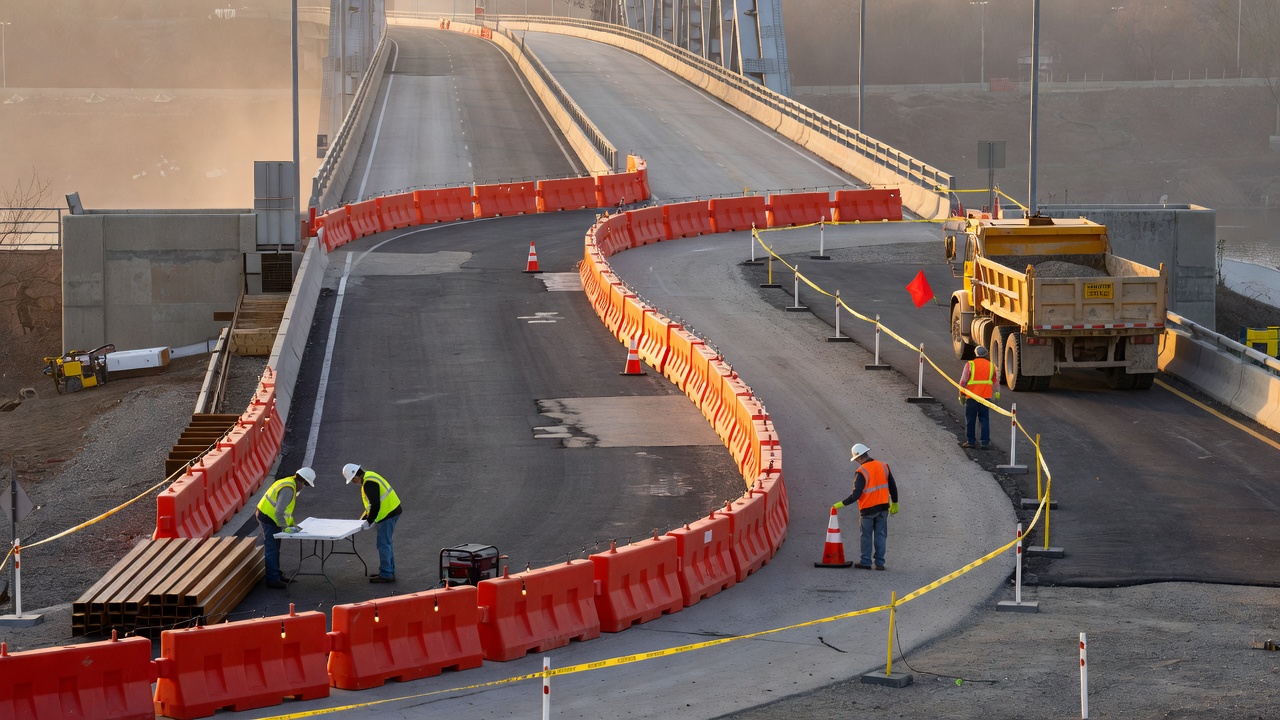
Bring the operating parties in early
A robotic inspection may reduce the need for some people to enter a difficult space, yet the deployment still has interfaces with bridge operations. Roads, railways, waterways, utilities and nearby property may have separate permit, possession or notification processes. The owner should identify who authorizes access, who controls traffic, who coordinates with adjacent operators and who has authority to stop work. A technology supplier cannot make those decisions on the owner’s behalf.
Start with the asset’s operational context. Note traffic volumes and speeds, pedestrian routes, rail timetables, navigation, overhead power, working-at-height exposure, lifting operations and public access. Consider how launching or recovering equipment changes the risk profile. A compact machine may need a larger exclusion zone than expected when tethered, supported by a person or operated near moving traffic.
Make the method statement specific
A generic risk assessment rarely captures the details that matter beneath a particular structure. A job-specific plan should identify the exact inspection area, access route, equipment configuration, task sequence, team roles, communications, environmental checks, exclusion zones and emergency arrangements. It should state what weather or visibility conditions trigger a postponement and how those limits are monitored. Specify the equipment’s operational constraints, including communications range, power reserve, attachment conditions, payload and recovery requirements.
Assign clear roles: a competent operator, a person monitoring the work area where required, an owner’s representative, a traffic or possession coordinator and a designated emergency lead. One person may hold more than one role only where the task and applicable rules allow it. Agree standard messages for stop, hold, return and emergency recovery. Test radio or data links before the machine enters a position where a lost connection could create a hazard.
Plan for failure, not just the ideal route
Consider a blocked path, loss of adhesion, tether snag, camera failure, low battery, unexpected wind, water level change, dropped object, communication loss or equipment immobilization. For each credible event, name the safe state, decision-maker and recovery method. If recovery depends on a second access platform, lifting point or specialist crew, confirm that resource is actually available during the planned window. Avoid plans that rely on a person improvising under a live structure.
Where the equipment carries a tool, include hazards from contact forces, debris, fluids, heat, noise or surface disturbance. For aerial platforms, consider rotor wash, proximity, visibility and local flight requirements. For magnetic or tethered devices, confirm attachment conditions and secondary retention where appropriate. Follow the relevant owner procedures, manufacturer limits and jurisdictional requirements; do not infer a safe working method from an equipment demonstration.
Weather and timing are engineering inputs
Weather affects both safety and data quality. Gusts can move a suspended platform or destabilize an aircraft. Rain may reduce visibility, change friction, affect electrical equipment or contaminate a sensor view. Cold can influence battery performance; heat can affect equipment and personnel. Water level and flow can alter access and rescue options. Set limits for the entire work system and monitor actual conditions, with a practical time margin for withdrawal and recovery.
Schedule around the asset’s operation and the work’s recovery needs. A short night closure may reduce traffic conflict but complicate lighting and visibility. A railway possession may require strict handback timing. Vessel restrictions may be affected by changing water conditions. Build time for setup, functional checks, breaks, data checks and safe removal; do not define the shift only by the time spent collecting imagery.
Verify completion and hand back cleanly
Before releasing a closure, confirm that all equipment, tools, tethers and temporary protection are removed or accounted for; the work area is clear; barriers and traffic controls are restored by authorized personnel; and any asset condition requiring immediate attention has been reported. The team should verify the expected coverage, record gaps and capture metadata while the location is still known. A rushed departure can turn an otherwise good inspection into a poor record.
After the shift, review the job against its plan. Record changes, interruptions, incidents and near misses, plus the reason for any coverage gap or task variation. Update the owner’s inspection record and identify follow-up actions. Keep safety documentation and technical evidence linked to the same job identifier so that an asset manager can see not just what was observed but under what conditions it was observed.
Deployment safety is not a form to complete once. It is a live operational decision that responds to geometry, weather, people and equipment behaviour. If conditions differ materially from the plan, pause, reassess and use the stop-work authority. The work is successful only when the team can return safely with useful, appropriately qualified evidence.